
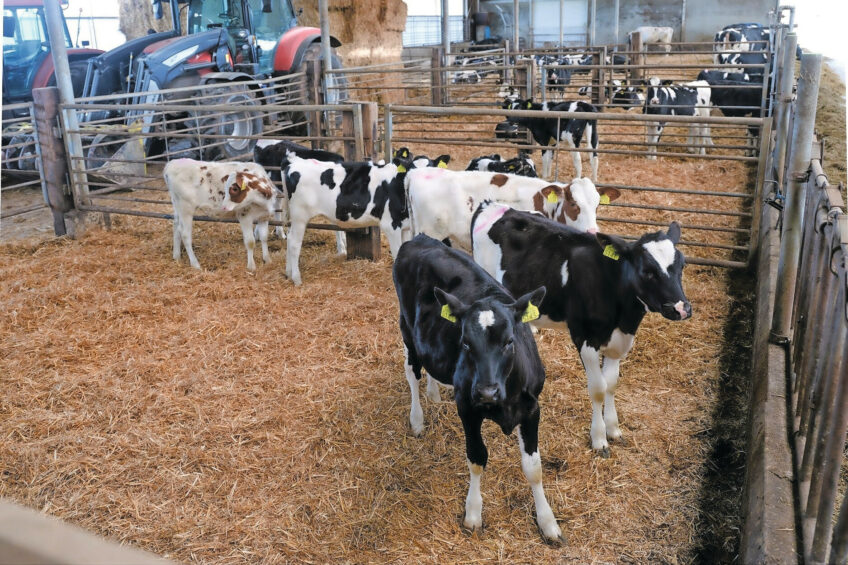
A new study from the University of Bristol has revealed important insights into how milk intake affects the behavior of dairy calves. The research shows a strong connection between feeding levels, learning behavior, and play activity.
Calves that receive higher milk allowances not only experience reduced hunger but also display more natural play behavior, which is a key indicator of animal welfare.
What the Study Investigated
Researchers compared two groups of dairy calves over a controlled period:
- One group received 12 litres of milk per day
- The second group received 6 litres per day, which is considered standard in many dairy farming systems
After the feeding period, both groups were tested using simple maze-based tasks where they had to locate a milk reward.
Before testing, all calves experienced a 16-hour fasting period, reflecting common farm feeding routines with two daily meals.
Key Findings From the Research
1. Hungry calves performed faster in food-seeking tasks
Calves that received less milk showed:
- Faster completion times in maze tasks
- Improved memory for locating rewards
- Stronger motivation to find food
This suggests that hunger increases focus on survival-driven behavior.
2. Well-fed calves showed more play behavior
Calves that received higher milk allowances:
- Were less driven by food rewards
- Engaged more in play activities
- Showed reduced urgency in completing food-based tasks
This shift in behavior indicates improved comfort and welfare.
3. Play is a key indicator of animal welfare
According to researchers from the University of Bristol Veterinary School, play behavior is not random—it reflects the emotional and physical state of animals.
Calves that play more are generally considered:
- Less stressed
- Better nourished
- More behaviorally balanced
Expert Insights From Researchers
Lead researcher Jillian Hendricks explained that the study is among the first to demonstrate how hunger directly competes with play behavior in young animals.
She noted that animals prioritize food-seeking over play when resources are limited.
Senior lecturer Dr. Ben Lecorps added that standard feeding practices may unintentionally limit natural behaviors in calves, suggesting that increased milk intake could improve overall welfare by reducing hunger stress and supporting natural play.
What This Means for Dairy Farming
This research has practical implications for modern dairy farming:
- Standard milk feeding levels may not fully support natural calf behavior
- Increasing milk allowance can improve animal welfare indicators
- Play behavior can be used as a measurable sign of well-being
For farmers, this means feeding strategies are not just about growth—they directly influence behavior, stress levels, and development.
Why This Study Matters
Understanding calf behavior is critical for improving livestock welfare standards. This study highlights that nutrition is not just physical fuel—it shapes emotional and behavioral development as well.
Better-fed calves are not only healthier but also more behaviorally expressive, especially through play, which is essential for early development.
Conclusion
The University of Bristol research clearly shows that milk intake plays a major role in shaping calf behavior. While lower-fed calves focus more on food-related tasks, higher-fed calves display increased play, suggesting improved welfare and reduced hunger stress.
As dairy farming practices evolve, balancing nutrition and behavioral health will become increasingly important.
great
Thanks for review
Interesting study. It clearly shows how nutrition impacts animal behavior, not just growth.
True, and it also shows how strongly feeding levels can affect stress and natural behavior in animals.