
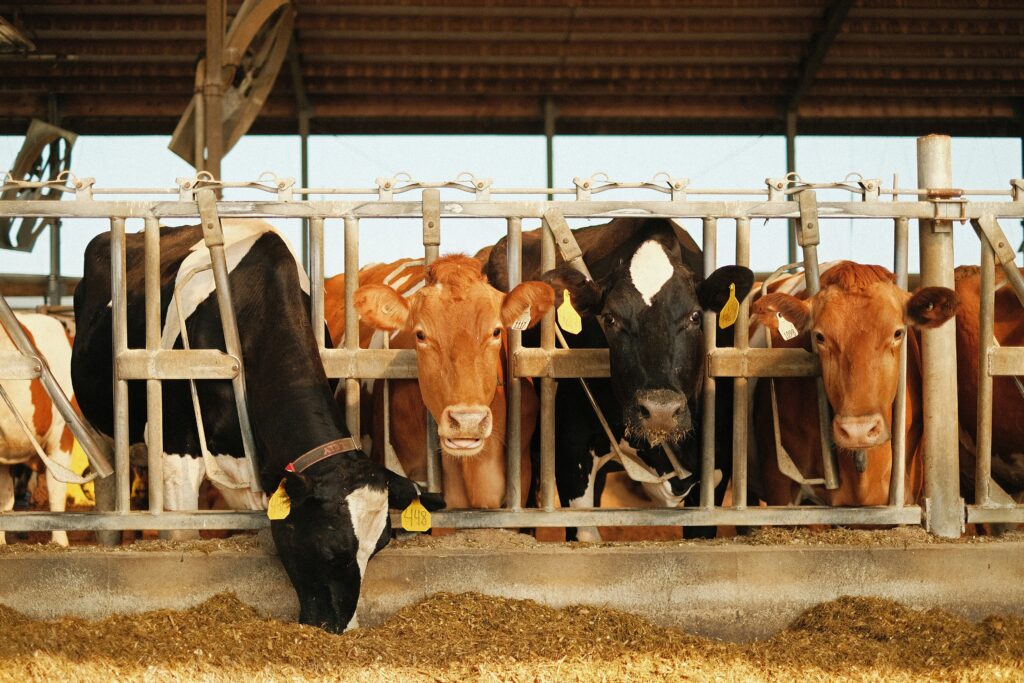
🐄 Better Fed Calves Show More Play Behavior, Study Finds
Recent research has revealed an interesting insight into dairy calf behavior: calves that receive higher amounts of milk not only stay healthier but also show more playful activity.
The study suggests that nutrition doesn’t just affect growth — it also impacts how young animals behave, learn, and interact with their environment.
🥛 More Milk, Different Behavior
Researchers compared two groups of dairy calves:
- One group received 12 litres of milk daily
- The other group received 6 litres, which is closer to standard farm practice
Both groups were observed while completing simple learning tasks, including finding milk rewards in a maze.
Key observations:
- Calves given less milk were quicker at completing tasks and showed stronger focus on finding food.
- Calves given more milk were less food-driven and instead spent more time playing.
🧠 What the Study Suggests
According to researchers at the University of Bristol, hunger plays a strong role in shaping animal behavior.
When calves receive less food, their priority becomes survival — finding and remembering food sources. However, when they are well-fed, they are more relaxed and naturally engage in play behavior.
Lead researcher Jillian Hendricks explained that the study helps us understand how animals balance basic needs like hunger with natural behaviors such as play.
🐮 Why This Matters for Farmers
Experts say this research is important for dairy farming practices.
Animals that receive only minimal milk may show signs of hunger-driven behavior, which can limit natural development. On the other hand, better feeding may support both physical health and natural behaviors like play.
As Dr. Ben Lecorps from the University of Bristol noted, adequate feeding doesn’t just reduce hunger — it also allows calves to express normal, healthy behavior patterns.
⏱️ Study Conditions
In the study, both groups were part of a controlled feeding system where they were tested after a standard 16-hour fasting period, which is common in dairy management practices.
Even after this fasting period, calves that received more milk still showed a stronger tendency to play.
📌 Final Insight
The research highlights a simple but important idea:
Better nutrition doesn’t only improve growth — it also improves behavior, welfare, and overall animal well-being.